
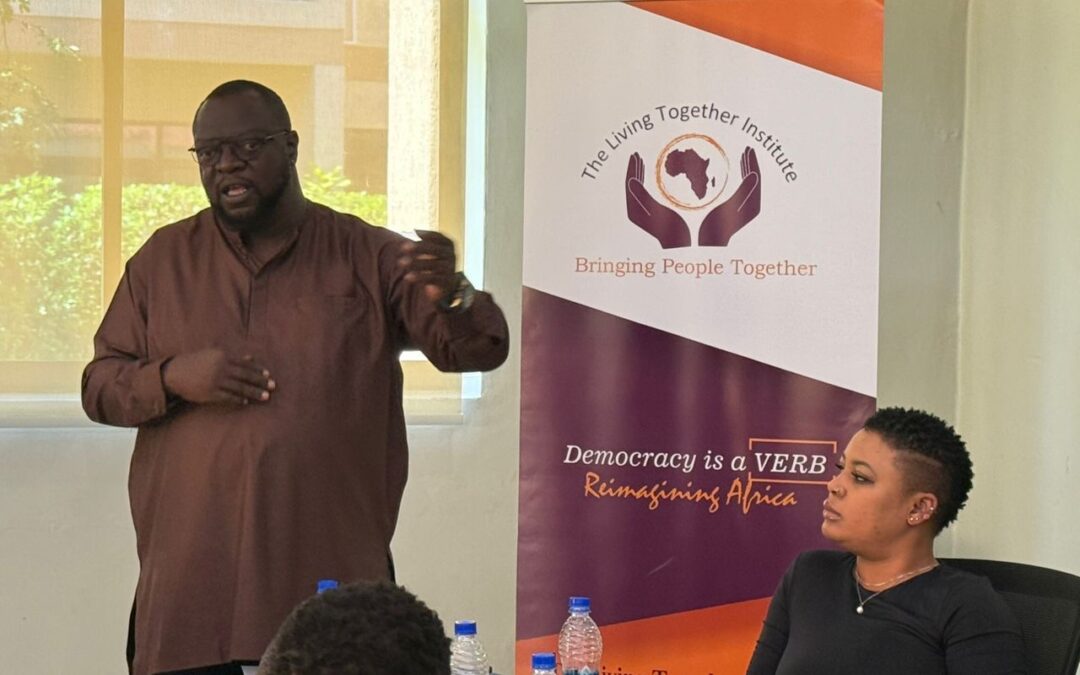
At the opening of the Living Together Institute’s Regional Conference in Salima, Malawi, Dr. McDonald Lewanika stood before a room of activists and changemakers and challenged them to reimagine democracy. Not as a distant system of governance, but as something urgent, intimate, and alive.
“Democracy is not just a noun—it’s a verb,” he began.
“It is something we live, practice, and sustain through care, connection, and collective resilience.”
These were not just poetic words; they were a warning and a blueprint for how to fight for human rights and democratic values in a world where both are under siege.
Dr. Lewanika cautioned against the growing glorification of coups and the quiet erosion of human rights, especially across Africa’s central belt—Niger, Mali, Burkina Faso, Chad, Guinea, and even stretching into historically democratic nations like Ghana and Nigeria. The narrative that democracy doesn’t deliver is gaining traction, and with it comes the risk of losing the very freedoms that civil society has spent decades fighting for. “We must be careful not to romanticize instability,” he said. “The cost is too high.”
His words carried both weight and urgency, challenging participants to ground their activism not only in passion but in strategy. He called for a revival of political education—spaces where young activists can build ideological backbone, learn from history, and sharpen their tools. “A struggle that has no solid theoretical grounding is doomed to fail,” he declared. “What is our theory of change? How do we place issues like identity politics, women’s rights, and human dignity at the centre—without losing the broader fight for democracy?”
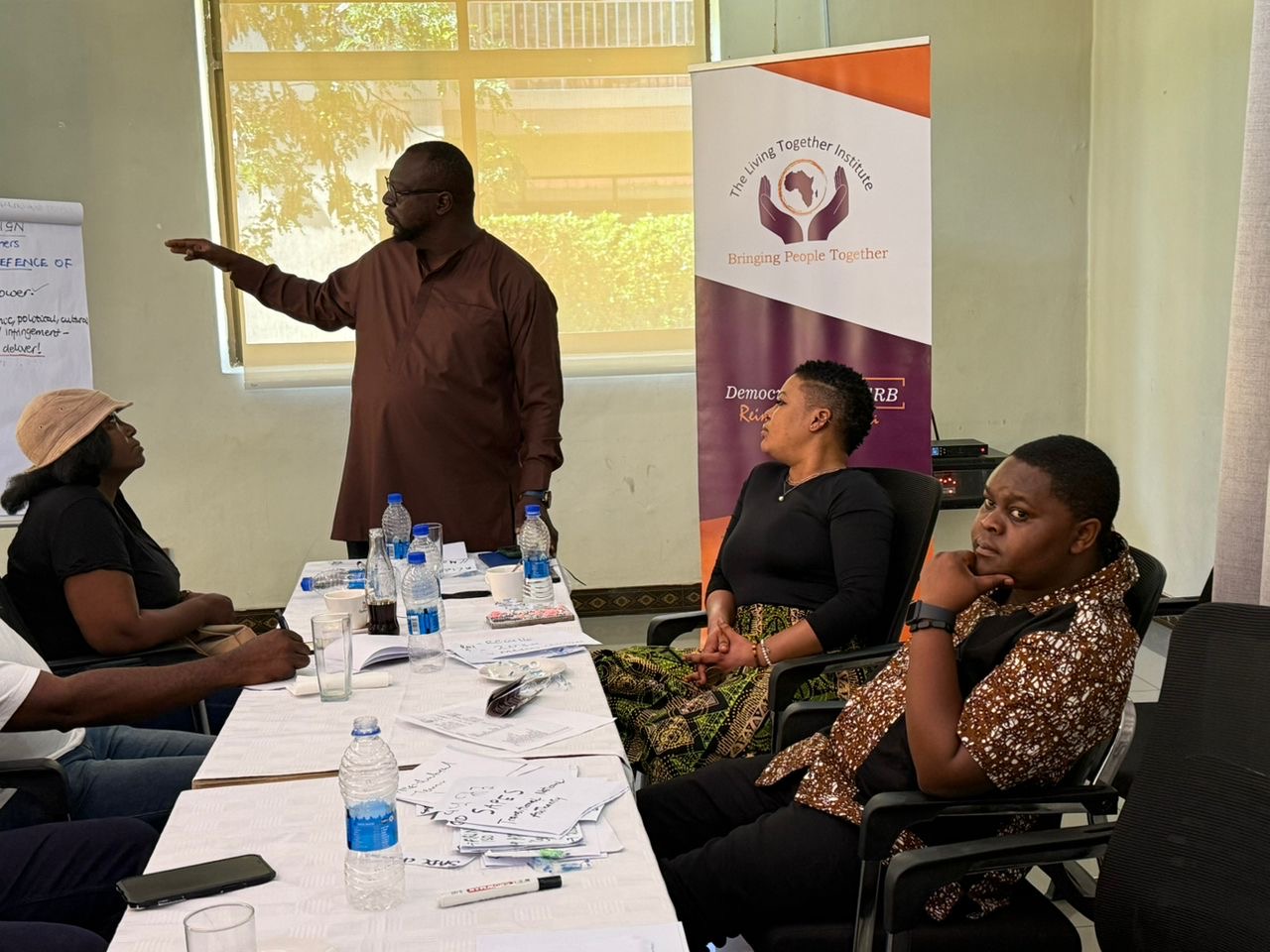
He offered the Living Together Institute itself as a model: a sanctuary that is emotional, intellectual, and practical. A space where activism is not only strategic, but soulful. Where people come together not only to protest and campaign, but to reflect, debate, and imagine.
In confronting the limitations of how we’ve come to understand the world, Lewanika pointed out that the once-popular VUCA framework—Volatility, Uncertainty, Complexity, Ambiguity—no longer fully explains our reality. Change today is constant, compounding, and unpredictable.
Instead, he proposed a new way of thinking: FLUX—Fast, Liquid, Uncharted, Experimental. In this reality, the role of the activist must shift too. It is not enough to react. We must learn to engineer. To design. To build resilient systems and resilient people.
“We need to act like engineers of change,” he urged.
“We must be ready to experiment, to adapt, and to embrace the unknown.”
He asked the room to consider: What new skills do we need to bring to the table? What kinds of capacities do we need to build in ourselves and each other? How do we support our institutions while preparing to challenge them? And crucially, how do we make space for the new while dealing with the remnants of the old?
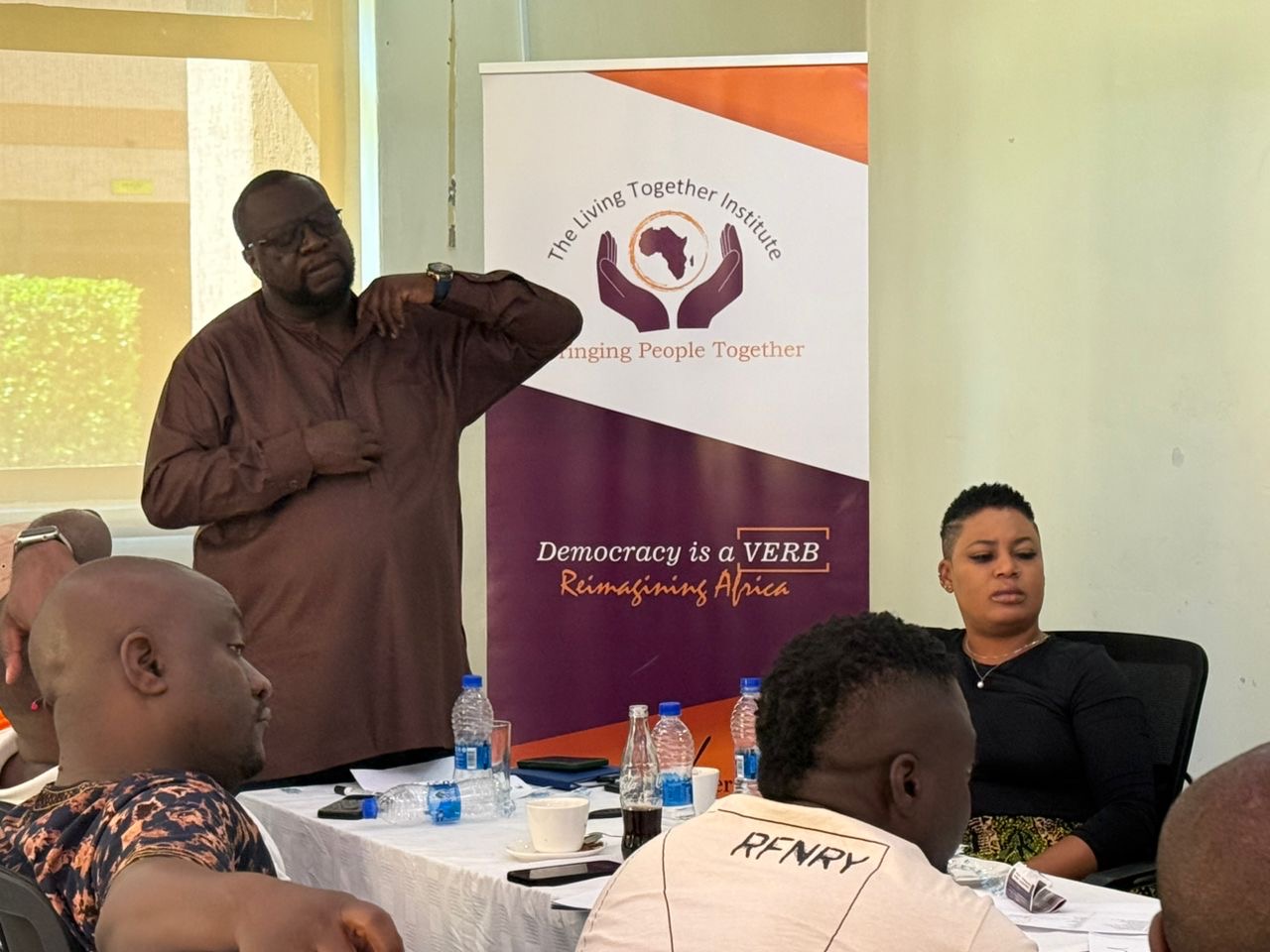
For Dr. Lewanika, regenerative activism is the only way forward. It’s about sustaining not only the cause but the people. It’s about creating systems and movements that can outlast moments, campaigns, and even generations.
Activism, he reminded everyone, must be resourceful, creative, and rooted in context. “From Malawi to Mbare, we must begin where the people are,” he said. “Not where we want them to be, but where they actually are.”
He warned against leaving people behind in the rush toward innovation. While the digital age has opened new doors for organizing, it has also widened the gap between those online and those left behind.
“We are not in America, we are in Malawi,” he emphasized, reminding participants that activism must always reflect local realities.
Drawing from scripture, he invoked the story of Shadrach, Meshach, and Abednego, who refused to bow to tyranny and trusted that deliverance would come. It was a powerful reminder that faith, resilience, and conviction still matter. In the face of authoritarianism, misinformation, and democratic fatigue, these qualities remain as vital as strategy and structure.
As the conference began in earnest, one thing was clear: Dr. Lewanika’s address was not just a speech. It was a call to regenerate. To rethink how we fight, what we fight for, and who we bring with us on the journey. In this era of flux, it is no longer enough to resist. We must also reimagine.
It’s inspiring to hear Dr. Lewanika’s call to reimagine democracy as something alive and urgent, not just a distant system. His emphasis on democracy as a verb—something we actively practice—resonates deeply, especially in a time when democratic values seem under threat. The warning against romanticizing instability is crucial; it’s easy to forget the high cost of losing hard-won freedoms. I appreciate his focus on political education as a tool for grounding activism in strategy and theory. The idea of the Living Together Institute as a space for both strategic and soulful activism is compelling—it feels like a much-needed model for our times. But I wonder, how can we ensure that such spaces remain inclusive and accessible to all, especially those on the margins? What steps can we take to make this vision of democracy a reality in our communities?
Dr. Lewanika’s speech is a powerful reminder of the urgency and intimacy democracy demands. His call to action resonates deeply, especially in a world where democratic values are increasingly under threat. The emphasis on political education as a tool for young activists is both timely and necessary. However, I wonder how we can ensure these educational spaces remain inclusive and accessible to all, particularly in regions with limited resources. The idea of democracy as a verb, something we actively practice and sustain, is inspiring but also daunting. How can we translate this into tangible actions in our communities? Do you think the Living Together Institute’s model can be replicated on a larger scale? I’m curious to hear your thoughts on balancing identity politics with the broader fight for democracy—where do we draw the line?
We have integrated libersave into our regional voucher system. It’s amazing how easily it allows us to combine various providers on a single platform.